
Car Emergency Kit Checklist: Build a Kit You Can Actually Use
Build a practical roadside emergency kit with a core checklist, climate modules, safe storage, and a simple six-month maintenance routine.
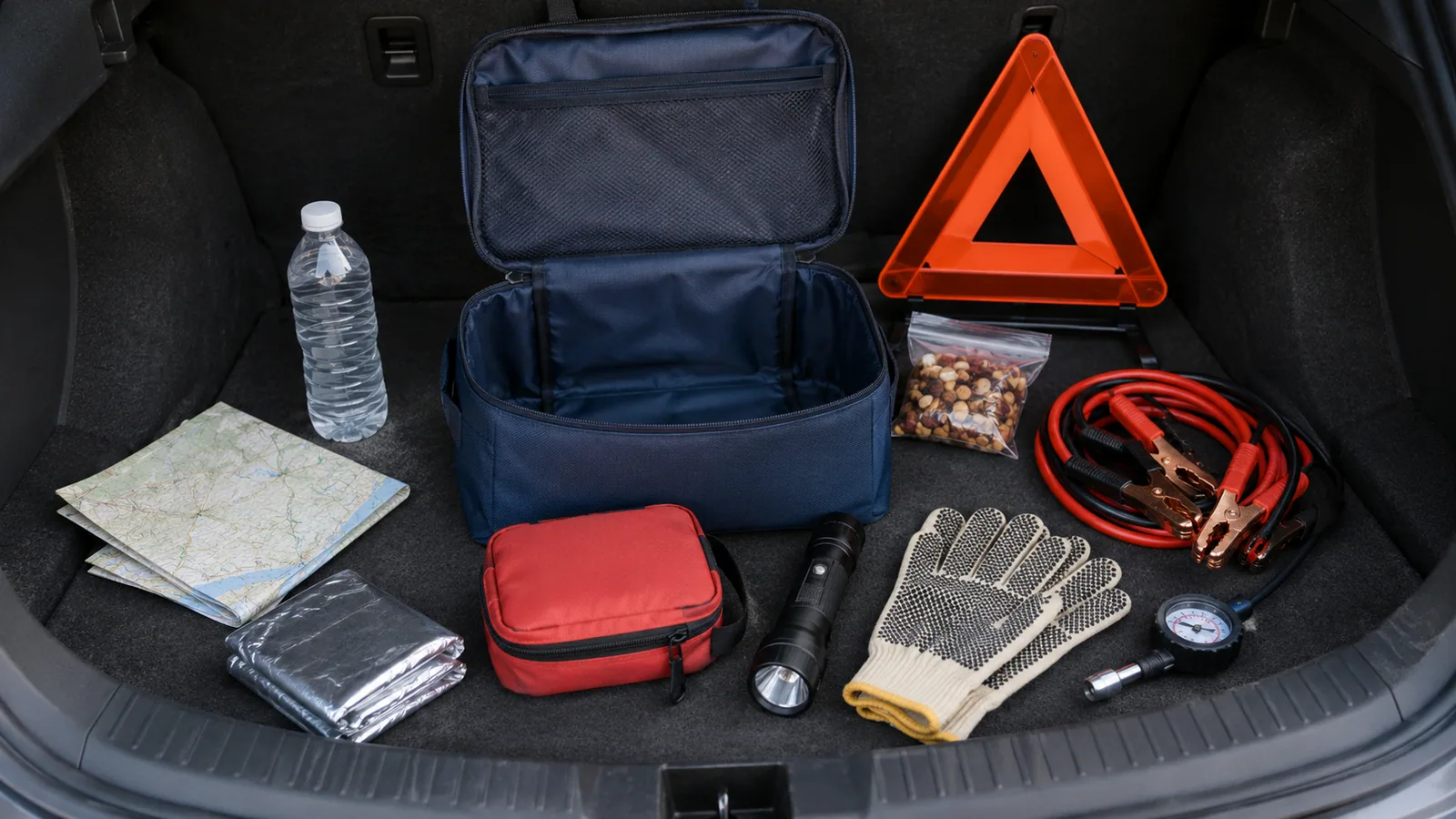
A car emergency kit should help you communicate, stay visible, handle limited roadside tasks, and wait more safely for qualified help. It should not create false confidence or become an uninspected bag of low-quality tools.
Quick car emergency kit checklist
Start with these categories, then adjust for your vehicle, climate, passengers, abilities, and typical routes.
| Category | Core items to check |
|---|---|
| Communication | Charged phone, compatible charger/cable, paper emergency contacts, roadside-assistance details |
| Visibility | Flashlight, checked batteries, reflective warning device appropriate where you drive |
| Tire and battery basics | Tire-pressure gauge, vehicle-approved jack/spare or repair system if equipped, jumper cables or an appropriate maintained jump starter |
| Basic protection | Work gloves, first-aid kit appropriate to your training |
| Waiting supplies | Drinking water, nonperishable food, blanket or insulating layer |
| Navigation and information | Owner’s manual access, insurance details, paper map for remote routes |
| Seasonal module | Ice scraper, shovel, traction material, extra warmth, or additional heat/remote-route supplies as conditions require |
If you are setting up a first car from scratch, use the new-driver essentials guide to put the emergency kit in the right order with documents, phone setup, and basic vehicle knowledge.
Use the checklist below as a starting point, then adjust it for your vehicle, climate, passengers, abilities, and typical routes.
The core kit
Communication and visibility
- Charged phone
- Compatible car charger and cable
- Flashlight with spare or checked batteries
- Reflective warning triangles or locally appropriate warning device
- Paper emergency contacts and roadside-assistance details
- Paper map for remote routes
NHTSA puts a charged phone at the top of its severe-weather preparation advice because it lets you call for help. Its road-safety guidance also recommends preparing before weather changes.
Minor roadside problems
- Jumper cables or a vehicle-appropriate portable jump starter
- Tire-pressure gauge
- Vehicle’s jack, ground mat, and lug wrench—if the car uses a spare-tire system
- Work gloves
- Basic tools recommended by the vehicle manufacturer
- Duct tape for limited temporary use
- Extra windshield-washer fluid when route and climate justify it
Do not assume every modern vehicle includes a spare tire. Check the owner’s manual and the storage area before buying accessories. If the car uses a sealant-and-compressor kit, confirm its expiration date and instructions.
Waiting and first aid
- First-aid kit appropriate to your training
- Drinking water
- Nonperishable food suitable for expected conditions
- Blanket or insulating layer
- Paper towels
- Necessary personal supplies you can store within their labeled temperature range
NHTSA’s summer kit list and winter kit list include these categories. A first-aid kit does not replace training or emergency services.
Add a cold-weather module
For snow and freezing conditions, consider:
- Ice scraper and brush
- Small shovel
- Sand or another suitable traction material
- Warm blanket or sleeping bag
- Dry hat, gloves, socks, and outer layer
- Additional food and water appropriate to the trip
The National Weather Service recommends updating a winter car kit and checking flashlight batteries before the season. Review its cold-weather preparation guidance for conditions in your area.
Add a heat or remote-route module
For long drives, desert routes, or areas with limited services, add water and supplies based on the distance between safe stops. Tell someone your route when conditions justify it.
Do not permanently store heat-sensitive medicines, batteries, aerosols, or products outside their labeled temperature ranges. A removable trip pouch is often safer than leaving everything in the trunk year-round.
Where to keep the kit
Store the main kit where it remains accessible after normal cargo is loaded. Secure it so it cannot slide around or become a projectile. Our car-trunk organization guide shows how to preserve access without filling the cargo floor.
Keep the flashlight, warning device, reflective vest if used, and roadside-assistance information near the top. Do not bury the items you need first under blankets or tools.
For small vehicles, a shallow lidded bin or secured soft-sided organizer can use less space than a large preassembled duffel. See how to organize a small car before choosing a container, or compare car organizer types if the kit shares trunk space with groceries, work gear, or reusable bags.
Preassembled kit or build your own?
| Choice | Best for | Main drawback |
|---|---|---|
| Preassembled kit | Fast starting point and one storage bag | Component quality and vehicle compatibility vary |
| Build your own | Control over every tool, climate item, and expiration date | Requires more research and maintenance |
| Hybrid | Useful bag and basic items, upgraded where quality matters | Still requires inspection before relying on it |
A hybrid approach works well for many drivers: use a durable container, then choose the communication, visibility, tire, battery, first-aid, and climate items individually.
Six-month inspection
Twice a year:
- Charge electronic tools and test the flashlight.
- Inspect cables, clamps, hoses, and packaging.
- Replace expired first-aid or tire-sealant items.
- Rotate food and water.
- Swap the climate module.
- Confirm roadside-assistance and insurance information.
- Remove items you no longer understand or need.
Pair this kit with the broader everyday car essentials checklist rather than duplicating personal items in multiple containers.