
Best Car Organizers for Women: Choose the Right Type for Your Car
Compare trunk, console, seat-back, visor, gap, and portable organizers by space, use case, attachment, access, and cleaning—not marketing labels.
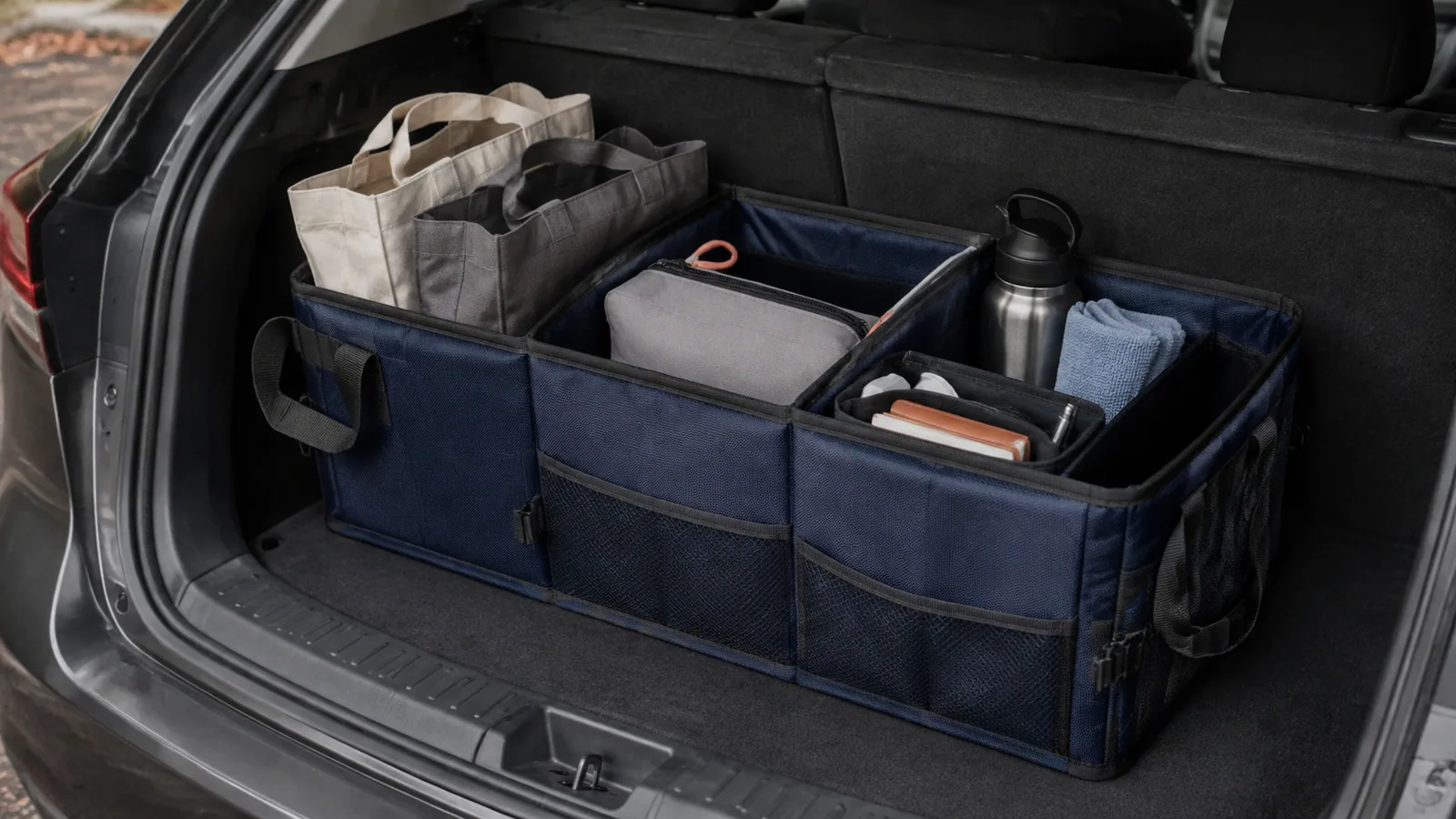
The best car organizer is the smallest secure solution to a repeated storage problem. For most drivers, that means choosing by location and cargo, not buying a matching set labeled “for women.”
Measure first, confirm that the organizer will not obstruct safe operation, and prefer removable solutions when the car serves different purposes during the week.
Quick decision table
| Organizer type | Best for | Main drawback |
|---|---|---|
| Collapsible trunk organizer | Groceries, emergency kit, reusable bags | Can slide or block under-floor storage |
| Rigid trunk bin | Heavy or leak-prone cargo | Uses space even when empty |
| Console tray or insert | Small daily items | Fit is highly vehicle-specific |
| Seat-back organizer | Passenger, child, or work supplies | Reduces rear legroom and can look cluttered |
| Seat-gap solution | Repeatedly dropped small items | Poor fit can affect seat movement or belt access |
| Visor organizer | A few flat, lightweight items | Can obstruct visibility or create bulk |
| Portable zip pouch | Personal and heat-sensitive essentials | Must be removed and reviewed regularly |
| Small trash container | Receipts, tissues, wrappers | Needs frequent emptying and leak control |
Best for flexible trunk storage: a collapsible organizer
A soft-sided collapsible organizer suits groceries, cleaning cloths, reusable bags, and an emergency kit because it can shrink when luggage needs the space.
Look for:
- External dimensions that fit the real trunk
- A way to secure it using compatible hooks or straps
- Structured sides that remain usable when partly filled
- Removable dividers only if they match your cargo
- Handles that do not interfere with a lid
- Access to the spare tire or repair compartment
Soft sides adapt well, while rigid-edge designs can protect fragile cargo. Independent testing by Car and Driver separates trunk organizers into soft-edge and rigid-edge styles, which is a more useful distinction than the number of pockets.
Best for small daily items: a fitted console solution
A vehicle-specific tray can create a shallow level for coins, charging adapters, or lip balm while leaving deeper storage below.
Avoid inserts that cover ports, rattle, prevent the console from closing, or require forcing a “universal” shape into place. Measure irregular curves and port positions. In some cars, one zip pouch is more flexible than a molded tray.
Best for passenger supplies: a removable seat-back organizer
Seat-back organizers work for children’s activities, wipes, travel items, or work supplies that passengers need. Choose one that stays close to the seat and can be removed when not needed.
Check rear legroom with the organizer loaded, not empty. Do not hang heavy hard objects where they can move toward passengers during sudden braking.
Best for dropped phones and keys: solve the seat gap carefully
First, change the placement habit: give the phone and keys a stable home before driving. If objects still fall into a wide gap, measure its width, seat movement, belt buckle position, and console shape.
A gap filler should not make it harder to buckle the seat belt, adjust the seat, or clean the area. Cup-holder versions can add bulk in a compact cabin.
Best for personal essentials: a portable pouch
A washable zip pouch is often the most versatile organizer in the car. It holds period products, tissues, hair ties, contact-lens items, or other daily supplies and can be carried out of extreme temperatures.
Use smaller internal pouches only if they help you find things; otherwise they add steps. Review the contents twice a year using our car essentials checklist.
Best for trash: choose location before capacity
A lined, wipeable container can prevent door pockets from becoming trash storage. Decide where it will go:
- Cup holder: compact, but sacrifices drink space
- Passenger footwell or console side: accessible, but may reduce space
- Seat back: larger, but less convenient for the driver
- Door pocket: discreet, but very limited
Look for easy liner changes and a stable attachment. Waterproof claims are less important than whether you will empty it before liquid or food waste becomes a problem.
What to avoid
- Organizers that enter the driver footwell
- Loose hard bins in the cabin
- Products that cover controls, ports, vents, visibility, or airbags
- Heavy visor storage
- “Universal fit” claims without dimensions
- More compartments than your actual belongings require
- Buying storage before removing what does not belong in the car
Measure-first checklist
Before ordering:
- Photograph the proposed location.
- Measure width, depth, and usable height.
- Move the seats through their normal range.
- Check controls, vents, belts, airbags, anchors, and trunk-floor access.
- List the exact items the organizer will hold.
- Decide how the loaded organizer will remain secure.
- Confirm the return policy in case real fit differs.
Start with the complete small-car organization method if you are not yet sure which storage problem you are solving.