
Car Essentials for New Drivers: What to Get First
A priority-based first-car checklist covering documents, roadside safety, phone setup, maintenance knowledge, and useful—not excessive—accessories.
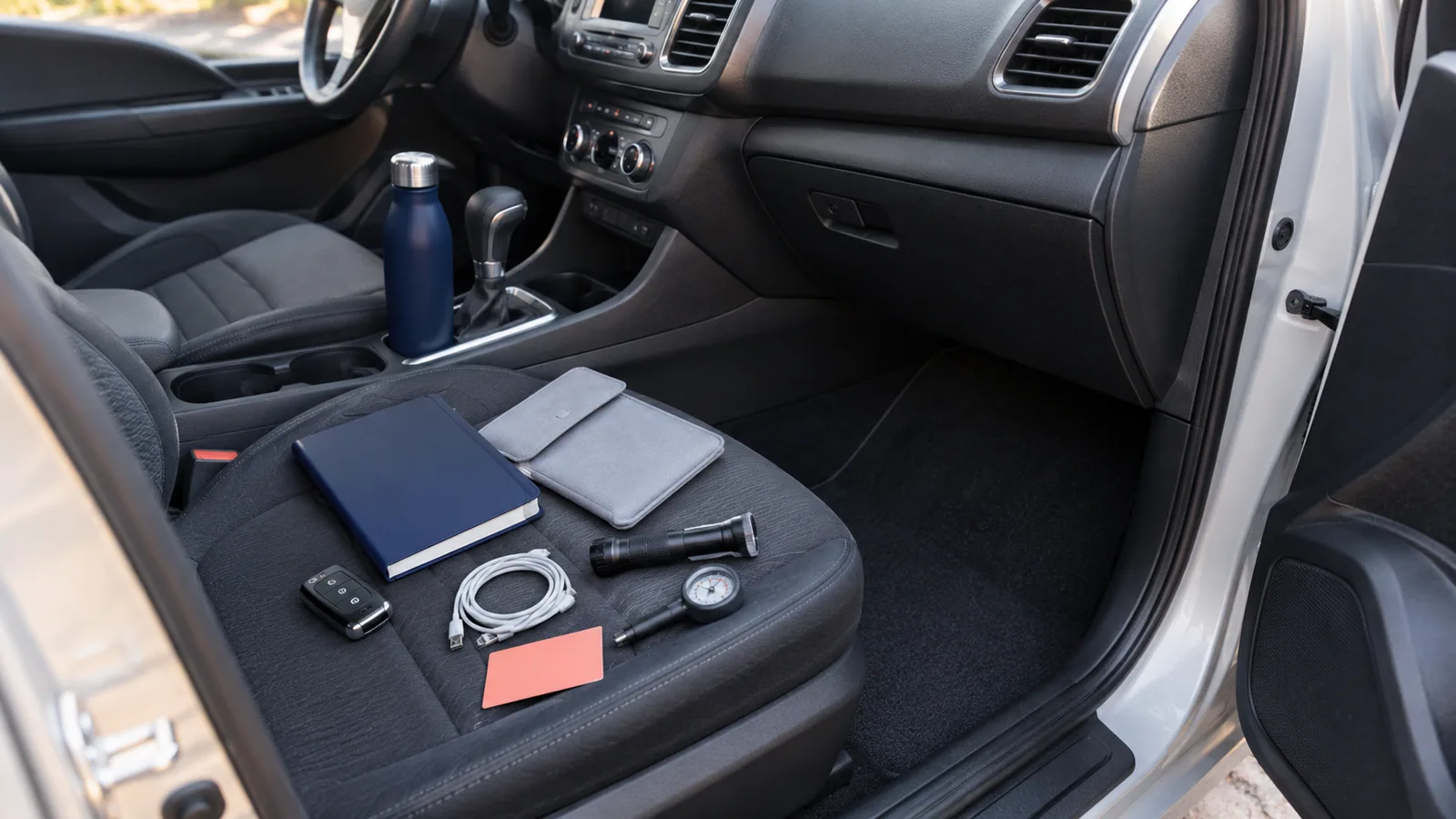
For a new driver, the best first-car setup is built in this order: know the vehicle, prepare for help, keep the phone charged and hands-free, then add organization and comfort. Decorative accessories can wait until the safety basics are understood.
Priority 1: know what the car already has
Before shopping, locate and read the sections of the owner’s manual covering:
- Warning lights
- Recommended tire pressure and where to find it
- Spare tire or tire-repair system
- Jack and lifting points
- Jump-starting procedure
- Fuel type
- Fluid checks
- Towing instructions
Physically locate the tools. A new driver should know whether the vehicle has a spare tire, a sealant kit, or neither before a flat occurs.
Priority 2: documents and assistance
Keep current registration, proof of insurance, roadside-assistance information, and emergency contacts where local rules permit and where they are easy to retrieve.
Save the insurer and roadside-assistance numbers in the phone, but keep a paper backup. Confirm what the plan covers—towing distance, jump starts, lockouts, tire changes, and fuel delivery can differ.
Priority 3: the core roadside kit
Start with:
- Phone charger and correct cable
- Flashlight
- Reflective warning device
- First-aid kit
- Work gloves
- Tire-pressure gauge
- Jumper cables or an appropriate jump starter
- Water and a small nonperishable snack
- Climate-appropriate layer or blanket
NHTSA includes these categories in its recommended roadside kit. Our car emergency kit checklist explains how to add seasonal modules without overpacking.
Priority 4: a legal, stable phone setup
A phone should support navigation and emergency communication without encouraging interaction while driving.
Check state and local rules before choosing a mounting position. The mount must not block the driver’s view, controls, vents needed for safe operation, or airbag deployment areas. Set the destination before moving and use voice guidance where appropriate.
A charging cable that reaches without crossing the steering wheel or gear selector is more important than decorative cable accessories.
Priority 5: a simple clean-and-organized system
New drivers often buy organizers before understanding what they carry. Begin with:
- One small trash container or removable waste bag
- One document sleeve
- One secured trunk container for the emergency kit
- One removable personal pouch
- Microfiber cloth for displays and glasses
After a few weeks, add storage only where a repeated problem appears. Our small-car organization guide uses measurements and zones to prevent wasted space.
Useful accessories after the basics
These product types can solve genuine problems when matched to the car:
- Portable tire inflator compatible with the vehicle’s tires and power source
- Jump starter correctly sized and maintained
- Trunk organizer with secure attachment
- Seat-gap solution if dropped items are a repeated distraction
- All-weather mats suited to the vehicle and climate
- Sunshade that fits the windshield
- Compact trash can with a leak-resistant liner
See our most useful car accessories for women for selection criteria and situations where each accessory is unnecessary.
What not to rush into buying
- “Universal” items without checking measurements
- Steering-wheel covers that change grip or fit poorly
- Loose dashboard decorations
- Accessories placed in airbag zones
- Bright interior lighting used while driving
- A large emergency kit whose tools you have not inspected
- Products marketed with unsupported safety promises
A 20-minute first-car setup
- Photograph the tire-information label and save the owner’s manual digitally if available.
- Add insurance and roadside-assistance numbers to the phone.
- Install the charger and mount while parked.
- Locate the spare or repair kit.
- Place the emergency kit securely in the trunk.
- Put documents in one sleeve.
- Remove loose objects from the driver’s footwell and dashboard.
The objective is confidence, not a full trunk. A new driver who knows the vehicle and can call for help is better prepared than one carrying dozens of unfamiliar gadgets.