
The Most Useful Car Accessories for Women—and Why They Earn a Place
Practical car-accessory recommendations organized by real problems: safety, charging, organization, cleaning, comfort, and daily convenience.
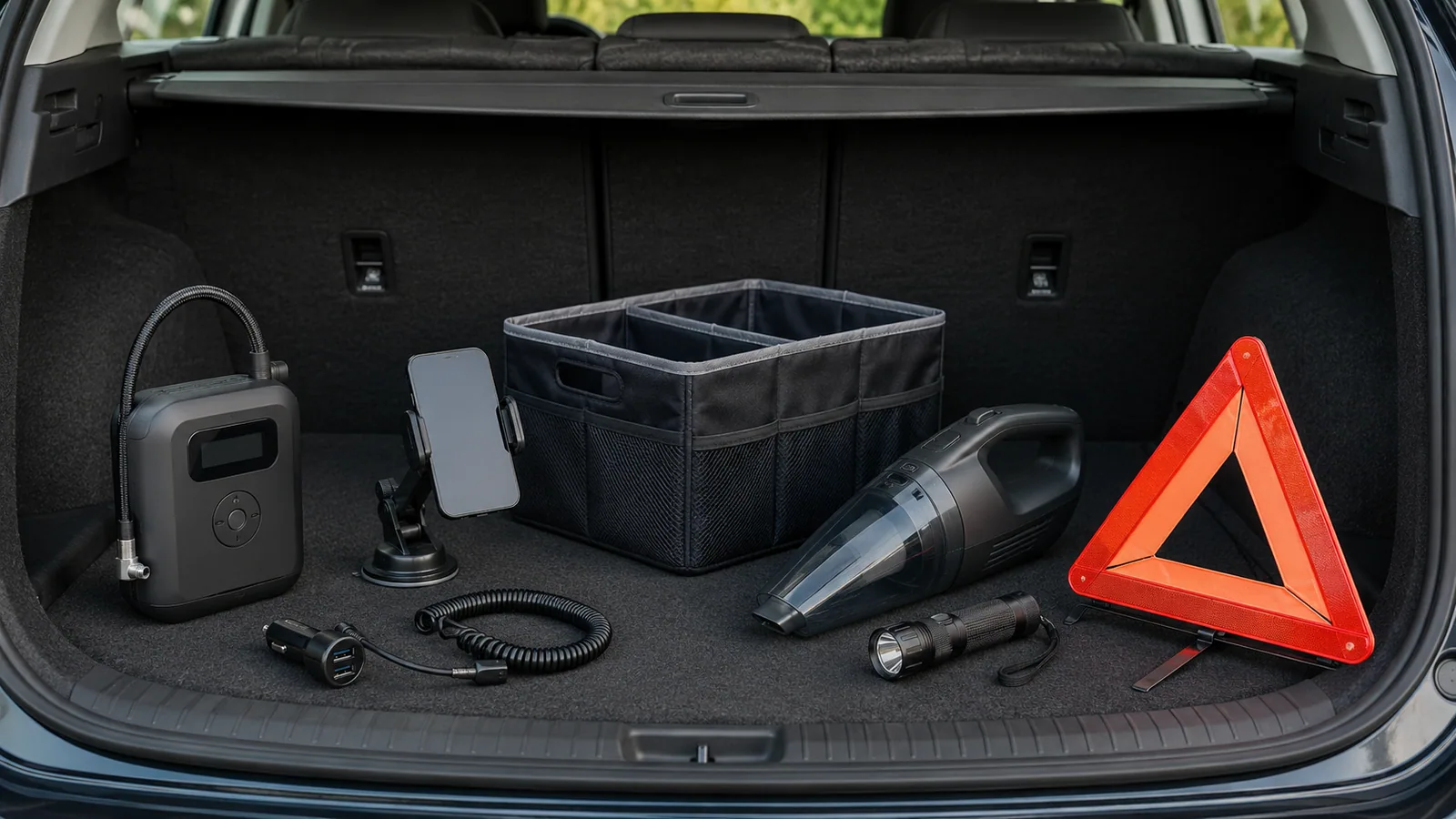
The best car accessories for women are not inherently different products. They are accessories selected around a driver’s actual vehicle, routes, climate, passengers, storage, and comfort needs—without assuming that “for women” means pink, decorative, or one-size-fits-all.
These are the product types most likely to earn space. We have not named a universal product winner because model-level recommendations require current compatibility and product evidence.
1. A reliable phone charger
Best for: navigation and emergency communication.
Why it earns a place: it solves a daily need and supports the most important emergency tool you already carry.
Skip or reconsider if: the cable crosses controls, the adapter is undocumented, or the car already provides a reliable connection.
Choose the correct connector and power standard for the phone and vehicle. Route the cable so it cannot interfere with steering, shifting, or safe entry and exit.
2. A stable, legally positioned phone mount
Best for: drivers who rely on phone navigation.
Why it earns a place: a stable glanceable position can be better than a phone sliding around the console.
Skip or reconsider if: it blocks visibility, controls, vents needed for safe operation, or an airbag area.
Mount style matters more than marketing: windshield or dashboard, vent, cup holder, and vehicle-specific mounts each trade visibility, stability, cooling, and space differently. Check local law and set the route before moving.
3. A tire-pressure gauge
Best for: every driver willing to learn the vehicle’s specified pressure.
Why it earns a place: it is compact and helps verify pressure rather than guess from tire appearance.
Skip or reconsider if: you will not learn where the vehicle’s tire-information label is or how to check cold pressure.
The correct pressure is vehicle-specific; do not use the maximum number molded on the tire as the routine target.
4. A portable tire inflator
Best for: drivers who want to correct a low tire at home or in a safe location.
Why it earns a place: it pairs measurement with a practical response.
Skip or reconsider if: the power lead cannot reach every tire, the duty cycle is unsuitable, or you expect it to repair tire damage.
Compare power source, hose and cable reach, gauge readability, auto shutoff, storage size, and tire-size compatibility. An inflator does not make a damaged tire safe to drive.
5. Jumper cables or a maintained jump starter
Best for: battery-related no-start situations where the manufacturer’s procedure permits their use.
Why it earns a place: it can shorten a common roadside delay.
Skip or reconsider if: you have not checked the vehicle procedure, cannot maintain the jump starter’s charge, or the unit is not sized appropriately.
Traditional cables require another suitable vehicle and correct connection. A jump starter is more independent but becomes useless if neglected. NHTSA includes jumper cables in its roadside kit guidance.
6. Reflective warning devices and a flashlight
Best for: roadside visibility and finding items during a power or lighting problem.
Why they earn a place: they support visibility before repair tools matter.
Skip or reconsider if: a warning device is not legal or appropriate where you drive.
Keep them near the top of the roadside kit, not below everything else. See our emergency kit checklist.
7. A secured trunk organizer
Best for: groceries, reusable bags, emergency supplies, or work gear that moves during turns.
Why it earns a place: it creates one flexible cargo zone and can fold when not needed.
Skip or reconsider if: it blocks the spare-tire compartment, slides freely, or consumes most of a small trunk.
Measure the loaded footprint and compare attachment methods. Our organizer decision guide explains the main types.
8. A small, lined car trash container
Best for: commuters, parents, and anyone whose door pockets collect wrappers.
Why it earns a place: it supports a simple exit routine.
Skip or reconsider if: it obstructs a passenger, encourages keeping food waste, or is difficult to empty.
Choose a location before choosing capacity. A compact bin emptied often can work better than a large hanging bag.
9. A removable essentials pouch
Best for: personal-care items, spare contact supplies, tissues, or small daily needs.
Why it earns a place: one portable pouch prevents many loose items and can leave the hot car with you.
Skip or reconsider if: it becomes a second handbag filled with expired products.
Review labels for storage limits and remove heat-sensitive items. Build the pouch from the broader car essentials checklist.
10. Properly fitted floor protection
Best for: wet, snowy, muddy, or sandy climates.
Why it earns a place: correct protection can make routine cleaning easier.
Skip or reconsider if: the mat is “universal,” moves, stacks over another mat, or can interfere with pedals.
Driver-side fit and retention are non-negotiable. Use products designed for the specific vehicle and follow installation instructions.
11. A windshield sunshade that fits
Best for: frequent parking in strong sun.
Why it earns a place: it can improve parked-car comfort and protect exposed surfaces.
Skip or reconsider if: it is awkward enough that you will not use it or it is left in place while driving.
Measure the windshield or choose a verified vehicle-specific fit.
12. A compact cleaning kit
Best for: handling small messes before they become permanent.
Why it earns a place: a cloth and surface-compatible method support a repeatable routine.
Skip or reconsider if: products may leak, overheat, or damage the car’s materials.
Use the simple clean-car routine before buying a portable detailing collection.
How we will choose named products
Before naming a product as a pick, Worth & Why will verify:
- Vehicle and device compatibility
- Current manufacturer specifications
- Dimensions and storage cost
- Power source and maintenance needs
- Safety-related claims and documentation
- Warranty and support
- Credible independent test evidence where available
- Meaningful drawbacks and alternatives
Until that evidence pack is complete, a useful category recommendation is more honest than a manufactured “best overall” winner.