
What Not to Leave in Your Car: Heat, Theft, and Storage Risks
A researched guide to items and personal information that should not live in a parked car, with safer alternatives for heat-sensitive and valuable belongings.
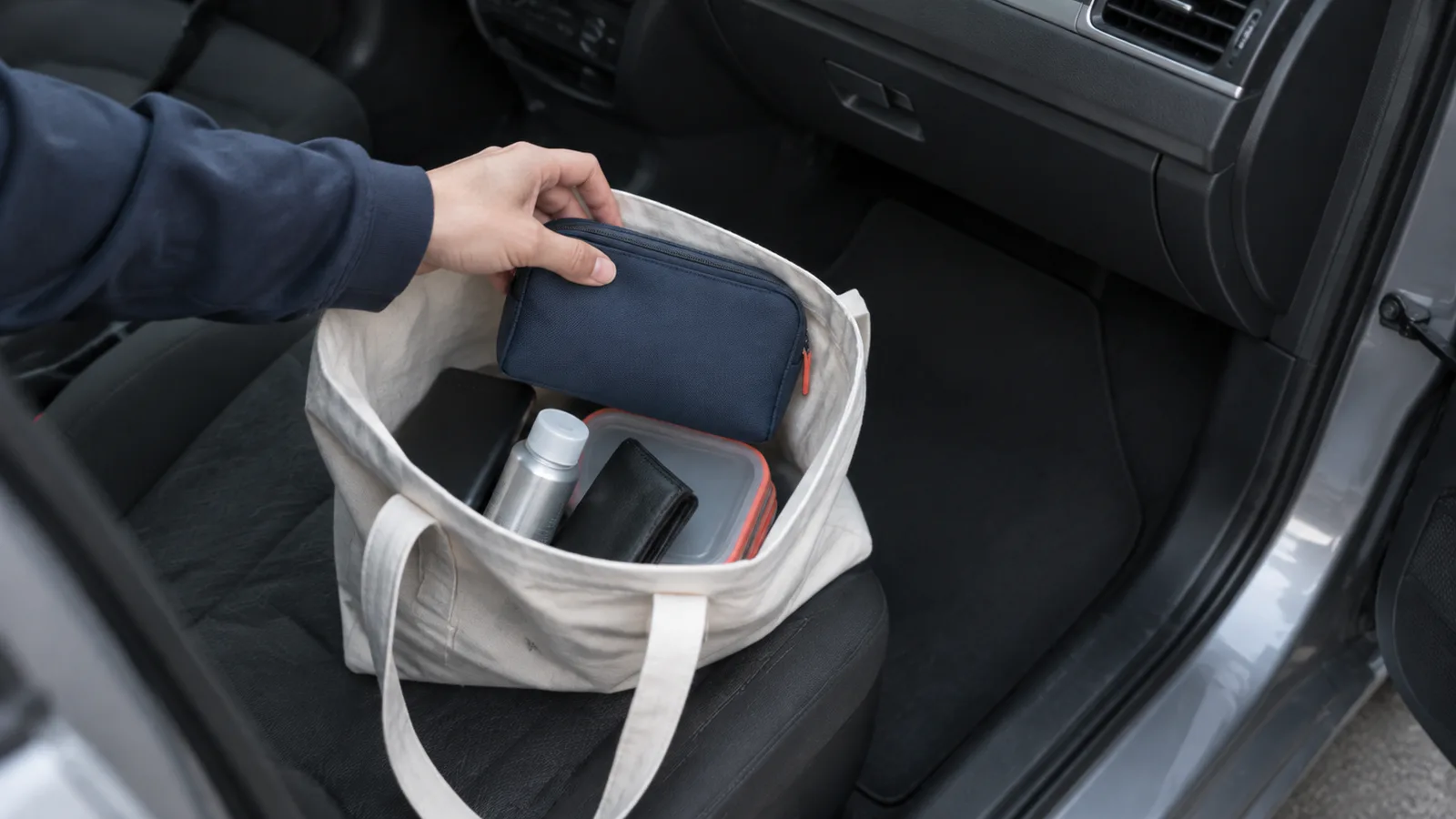
Do not leave people, pets, medicines, perishable food, valuables, identity documents, or heat-sensitive batteries and pressurized products in a parked car. Bring sensitive items with you, follow each product’s storage label, and use the vehicle only for supplies designed to tolerate its temperature range.
A parked car is not a stable storage environment. The cabin can heat quickly, cold weather can also damage products, and anything visible may attract theft.
Never leave a child or pet alone in a vehicle
This is different from protecting an object: it is an immediate life-safety issue. NHTSA says it is never acceptable to leave a child alone in or around a car, even in cooler weather. Its child-safety guidance notes that the cabin can rise almost 20°F in the first 10 minutes.
Do not use an open window, shade, water, or a short errand as a substitute for active supervision. Build a consistent “look before you lock” check into every exit from the vehicle. Pets should also leave the vehicle with you.
Medicines
The FDA advises people to avoid exposing medicines to extreme heat or cold and specifically says not to leave them in a car during summer or winter. Improper storage can make medicine less effective or harmful even before its expiration date.
Carry necessary medicine in a removable pouch and follow the label. Some products require refrigeration or a narrower temperature range. Ask a pharmacist what to do if a medicine has already been exposed to unsuitable temperatures rather than guessing from its appearance.
Perishable food and groceries
A parked car is not a refrigerator. USDA guidance says perishable food should be refrigerated within two hours, or within one hour when the temperature is above 90°F. That includes meat, poultry, eggs, dairy products, cooked leftovers, and other foods that require temperature control.
Choose refrigerated and frozen groceries near the end of a shopping trip, go home promptly, and use an insulated cooler with ice or frozen gel packs when the route requires it. If food has exceeded safe time and temperature limits, smell and appearance cannot prove it is safe.
Phones, laptops, power banks, and loose batteries
Electronics and batteries have manufacturer-defined storage and operating ranges. High or low temperatures can reduce performance, damage a battery, or cause a device to shut down. A visible laptop, phone, camera, or bag can also attract theft.
Take electronics and rechargeable power banks with you. Do not leave them charging unattended inside a parked vehicle, and do not use a swollen, leaking, punctured, or unusually hot battery. Follow the device manufacturer’s instructions for storage and disposal.
Aerosol cans, lighters, and fuel containers
Pressurized and flammable products carry storage warnings for a reason. Heat can increase pressure inside some containers, and hazardous household products are required to provide precautionary storage and use information on their labels.
Read the label on air fresheners, cleaners, spray products, lighters, and automotive chemicals. Do not make the trunk a permanent storage cabinet for products whose instructions require a cool or well-ventilated place. CPSC guidance says portable fuel containers should be kept in cool, well-ventilated areas and handled only in approved containers.
The vehicle title and high-value identity documents
Do not store the original vehicle title, passport, Social Security card, financial records, or unrelated medical records in the car. The title proves ownership, and state agencies such as New York’s DMV advise keeping it in a safe place rather than in the vehicle.
Carry only the registration and insurance evidence required by your state, protected in a slim wallet. Our glove-box checklist explains how to separate required vehicle paperwork from records that belong at home.
Wallets, keys, bags, and visible valuables
NHTSA recommends hiding valuables and removing tempting personal items from view as part of vehicle-theft prevention. A visible bag can invite a break-in even when it is empty.
Take wallets, purses, spare house keys, work badges, and devices with you. If a trip requires temporarily placing something out of sight, do so before reaching the parking location and remove it as soon as practical. Hiding an item does not make the vehicle secure storage.
Products with unclear temperature limits
Cosmetics, sunscreen, adhesives, sealed drinks, cleaning products, and first-aid supplies vary widely. Avoid absolute internet lists that treat every formulation or container as identical.
Use this decision rule:
- Read the product’s storage label.
- Check the manufacturer’s current instructions.
- If the car may exceed the stated range, take the item with you.
- If packaging is swollen, leaking, separated, or damaged, stop using it until the manufacturer or an appropriate professional confirms what to do.
Build one take-with-you pouch
Instead of checking many loose items at every stop, use one small removable pouch or tote for:
- Medicine
- Power bank and sensitive electronics
- Personal-care products with storage limits
- Wallet, keys, and work credentials
- Any food that needs temperature control
Keep permanent car supplies separate in a secured roadside kit. The everyday car essentials checklist distinguishes what can stay in the vehicle from personal items that should travel with you.
A quick exit check
Before locking the car, ask:
- Is every person and pet out?
- Am I leaving medicine, food, electronics, batteries, or a pressurized product behind?
- Can anyone see a bag, wallet, device, or key?
- Does anything remaining have a storage limit the car may exceed?
That short routine is more reliable than expecting a parked car to protect everything you carry.