
Closet Organizer Ideas Compared by the Space They Use
Compare wire, laminate, fabric, freestanding, door, and modular closet organizers by measurements, installation, access, flexibility, and tradeoffs.
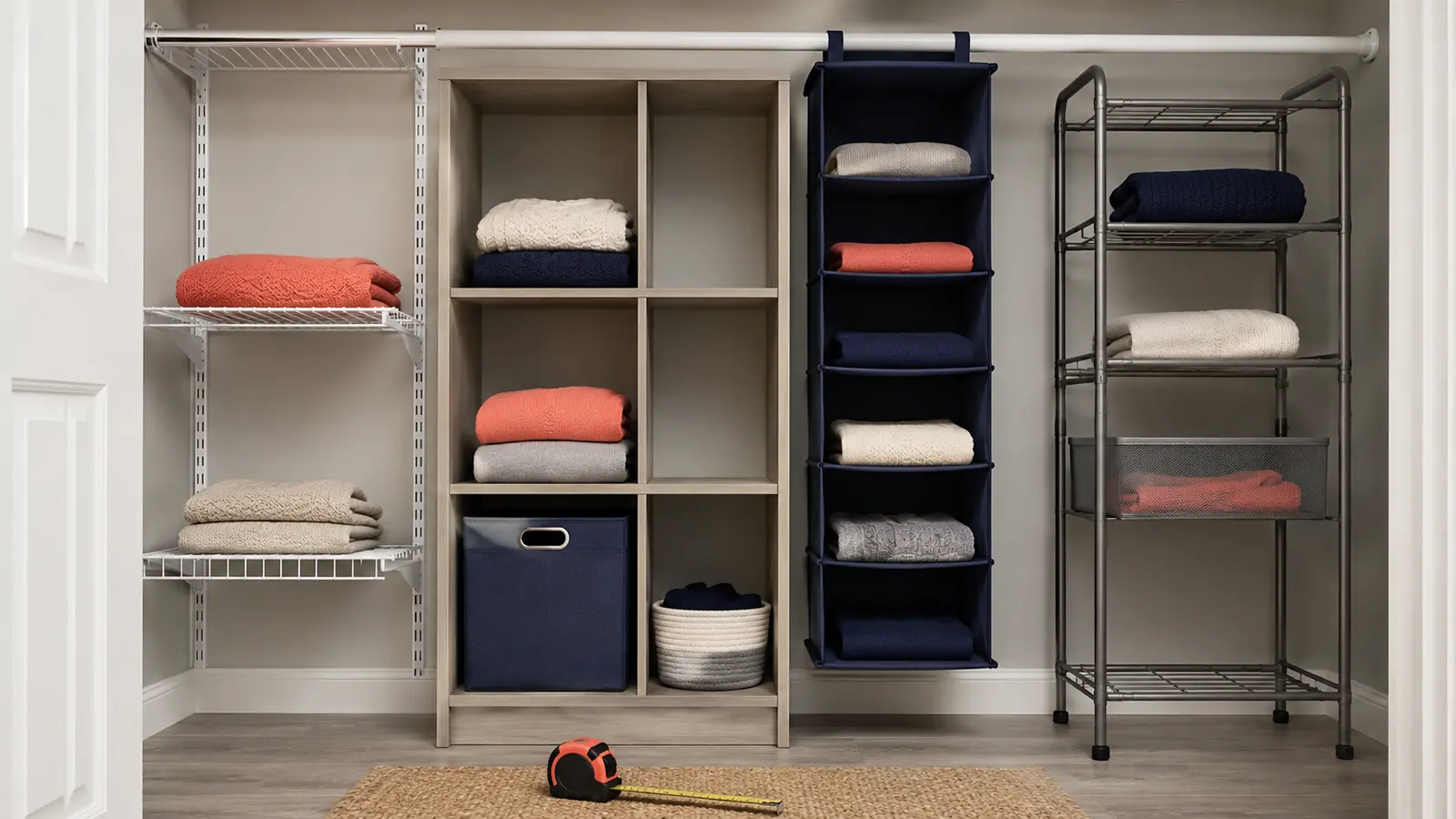
Choose a closet organizer by the storage problem it solves and the space it consumes. Every organizer takes something—wall area, rod width, floor depth, shelf access, door clearance, installation effort, or flexibility.
We have not tested or selected individual products for this guide. It is a researched product-type comparison with no affiliate links.
Measure before comparing systems
Record usable width, depth, vertical clearance, door opening, baseboards, trim, obstructions, and the longest hanging garments. Count the categories that must hang, fold, sit in drawers, or remain visible.
Then identify the shortage:
- Not enough short hanging space
- Not enough full-length hanging space
- Folded stacks collapse
- Shoes occupy the floor
- Accessories disappear
- Side or upper areas are inaccessible
- The system cannot be changed in a rental
A product that does not address the named shortage is added complexity.
Compare the main organizer types
| Type | Best fit | Space it consumes | Main tradeoff |
|---|---|---|---|
| Adjustable wire system | Flexible shelf and rod layouts | Wall area and installation points | Small items can slip; hardware remains visible |
| Laminate cubby or tower | Folded clothes, bins, shoes | Floor or wall width and depth | Fixed compartments may waste space |
| Hanging fabric shelves | Light folded items without drilling | Hanging-rod width | Can sag and displaces hanging clothes |
| Freestanding rack or shelf | Renters and reversible layouts | Floor area | Must remain stable; may need anchoring |
| Add-on hanging rod | More short-hang capacity | Vertical space below the main rod | Conflicts with long clothes and floor storage |
| Door organizer | Light accessories or suitable shoes | Door clearance and moving load | Compatibility and rubbing problems |
| Shelf dividers or bins | Existing shelves with weak boundaries | Shelf width and depth | Does not create new structural capacity |
Adjustable wire systems
These can combine shelves and rods and may be reconfigured when the wardrobe changes. The usable layout depends on wall type, rail or bracket placement, shelf depth, and supported loads. Follow the manufacturer’s installation and load specifications rather than assuming all wire systems perform alike.
Choose when: the wall can accept the approved installation and flexibility matters.
Skip when: you cannot make permitted holes or need closed visual storage.
Laminate towers and cubbies
Rigid compartments give folded clothes, bins, and shoes clear boundaries. They can also create dead gaps when compartment dimensions do not match the wardrobe.
Choose when: measured categories fit the compartments and the unit preserves hanging access.
Skip when: it blocks a reach-in opening or creates an unreachable side pocket.
Hanging fabric organizers
They install quickly and move easily. Their cost is rod width, and their soft structure is better suited to light items than dense stacks.
Choose when: you have surplus hanging width and need a few folded categories.
Skip when: the rod is already crowded or the intended load exceeds instructions.
Freestanding organizers
These avoid a full closet renovation and can be reused elsewhere. Measure around baseboards and the loaded depth of clothing or drawers.
Tall units and clothing-storage furniture require careful stability planning. Follow the manufacturer’s anchoring instructions and current CPSC furniture-safety guidance.
Choose when: floor space is available and reversibility matters.
Skip when: the unit narrows the walkway or cannot be installed safely.
Door and add-on organizers
These use overlooked surfaces but can transfer the shortage rather than solve it. A door organizer frees a shelf while consuming swing clearance; an add-on rod creates hanging space while removing floor space.
Use the closet door clearance guide and renter-friendly options before choosing them.
A decision process without brand hype
- Name the repeated storage failure.
- Measure the available zone and access path.
- Eliminate types that conflict with doors, long clothes, or lease rules.
- Check the maker’s full external dimensions, installation requirements, and load instructions.
- Mock up the footprint with tape or cardboard.
- Buy one targeted component before committing to a full system.
- Test it through a laundry cycle and weekly reset.
The small closet organization guide provides the inventory and zoning steps that should come first.
Who should delay buying
Delay the purchase if the closet has not been edited, the measurements exclude the door opening, the product requires unapproved installation, or the only benefit is making the closet look fuller. Open space is useful capacity; it does not need to be eliminated.