
Closet Door Storage Ideas That Still Let the Door Work
Evaluate over-door pockets, hooks, racks, and door-mounted storage by clearance, door type, loaded depth, item weight, and everyday access.
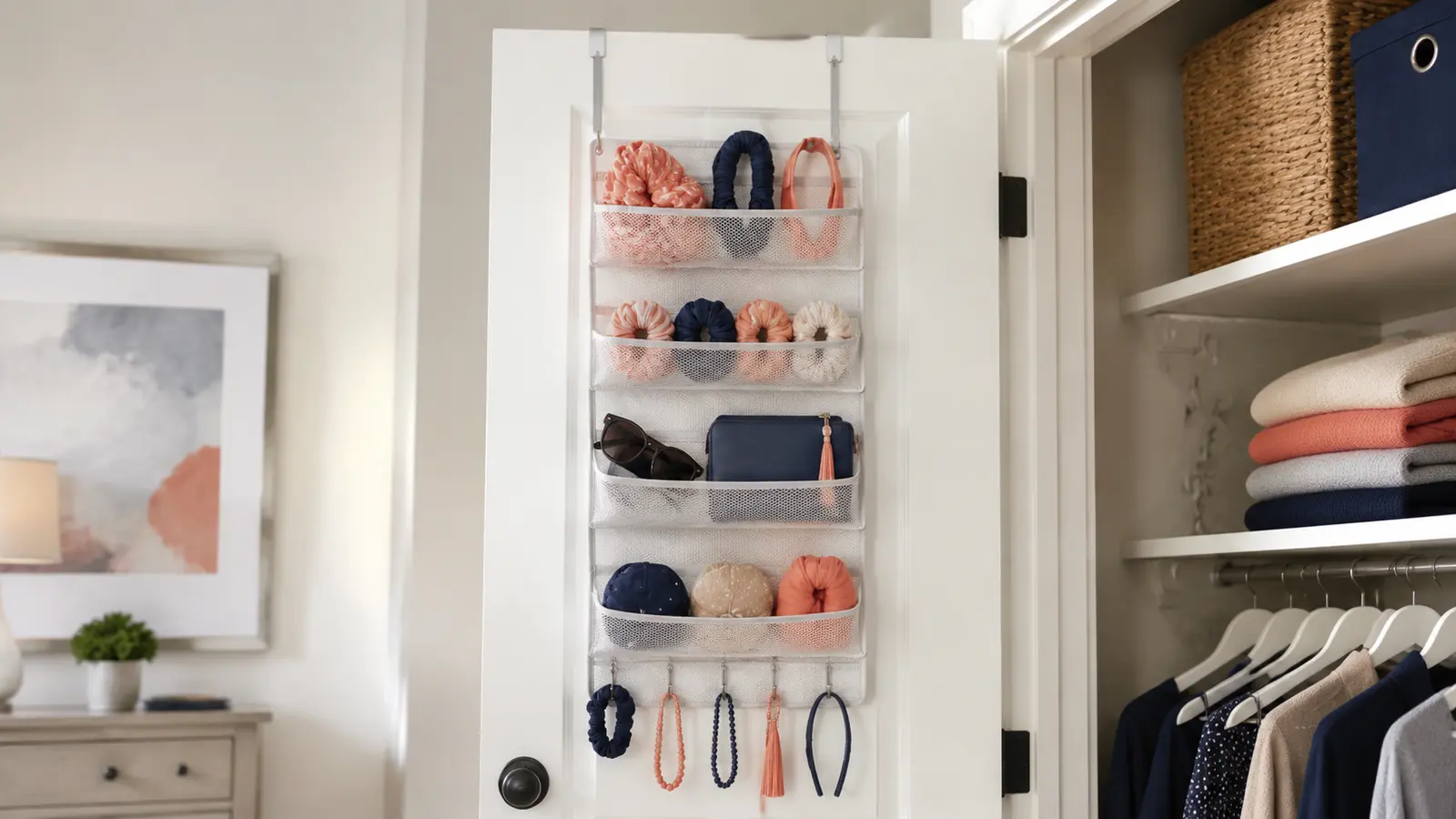
Closet door storage is useful only when the loaded organizer lets the door open, close, latch, and move without rubbing the frame or hitting shelves. Check the door type and clearance before deciding what to store.
First, identify the door
Hinged door
This is the most flexible surface for pockets, hooks, or a shallow rack. The organizer adds thickness on one side and hardware at the top or through the door.
Bifold door
Folding panels, hinges, and tracks make added thickness harder to predict. Many organizers are not intended for bifold doors; follow compatibility instructions rather than improvising.
Sliding or bypass door
The panels must pass each other. Added hardware or pockets can block movement, so door storage is often unsuitable unless a system is designed specifically for that door.
Pocket door
Do not attach or hang storage that interferes with the door entering its wall cavity.
Run a five-part clearance test
Measure and inspect:
- Gap above the door for over-door hooks
- Space between the door and frame
- Loaded depth toward shelves or hanging clothes
- Swing path near walls, furniture, and closet contents
- Handle, hinge, latch, and floor clearance
Mock up the loaded thickness with folded cardboard and tape before buying. Open and close the door slowly. Listen and look for rubbing.
Match the organizer to the item
Pocket organizer
Good for light, small categories that otherwise disappear: scarves, soft accessories, or suitable flat shoes. Deep pockets can hide small items, while transparent pockets improve visibility but look busier.
Hook rail
Useful for a small number of belts, bags, or hats. A hook becomes clutter when it holds several layered items that must be removed to reach the first one.
Rigid rack
Can provide clearer structure for shoes or accessories, but it adds more loaded depth and may transfer greater force to the door. Verify the door material, mounting method, intended load, and clearances.
Attached mirror or cabinet
This creates a larger load and affects swing. Use only a product designed for the door and install it exactly as instructed. A freestanding or wall-mounted alternative may be more appropriate.
What should not go on a closet door
Avoid heavy tools, unstable glass items, leaking products, or anything that can swing into a person when the door moves. Do not block a handle, latch, vent, or required access.
Keep frequently used lightweight items in the easiest pockets and occasional items higher or lower. If a daily item needs two hands and a fully opened door, another zone is probably better.
Compare the space tradeoff
Door storage may free a shelf or floor, but it can also consume the clearance in front of that shelf. In a small reach-in closet, the visible center may be more valuable than the added pockets.
Renters should confirm lease rules and read the renter-friendly closet guide before using screws, adhesives, or replacement hardware.
The loaded-door test
Load the organizer gradually, staying within its instructions. Confirm that the door still closes without force, hardware stays seated, items do not fall when the door moves, and adjacent storage remains reachable. Recheck after several days.
If the door’s behavior changes, remove weight or choose a shelf, drawer, or freestanding option. Storage should adapt to the door—not ask the door to work around it.